PyThrust
Welcome to the official documentation for PyThrust - an open-source Python framework for electric propulsion system analysis, co-design, and parameter optimization in UAV applications.
PyThrust combines empirical propeller data, brushless motor models, battery/system loss modeling, and OpenMDAO integration so UAV designers can move from theoretical propulsion sizing to real component choices with traceable calculations.
Core Capabilities
Electric UAV propulsion design usually crosses several domains: aerodynamics, motor electrical behavior, battery loading, component catalogs, and mission constraints. PyThrust keeps those pieces in one workflow:
-
Operating-point solver
Solve equilibrium RPM, thrust, torque, current, voltage, power, and efficiency for a coupled motor-propeller-battery system.
-
Catalog-backed selection
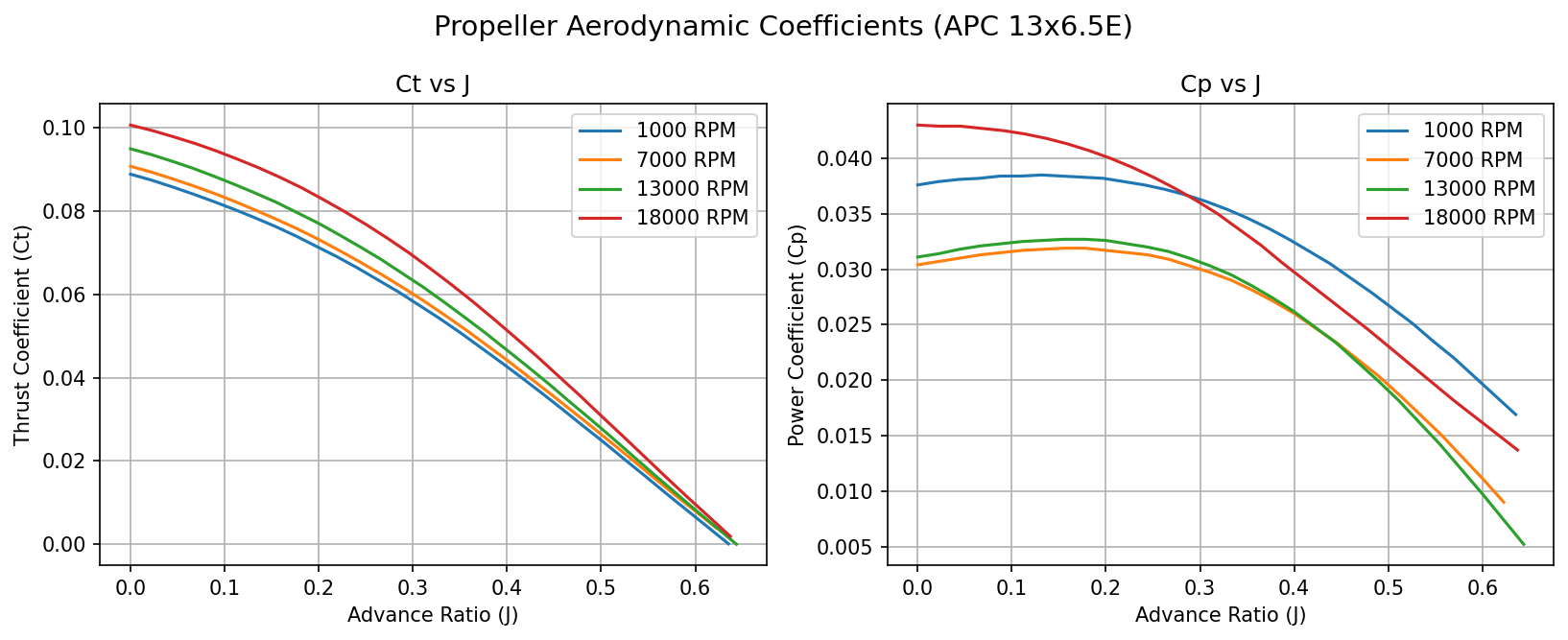
Query empirical propeller data and brushless motor records instead of sizing only against abstract component assumptions.
-
Battery-aware analysis
Use fixed-voltage batteries for quick studies or rate-map batteries when voltage sag and state of charge matter.
-
Calibration and optimization
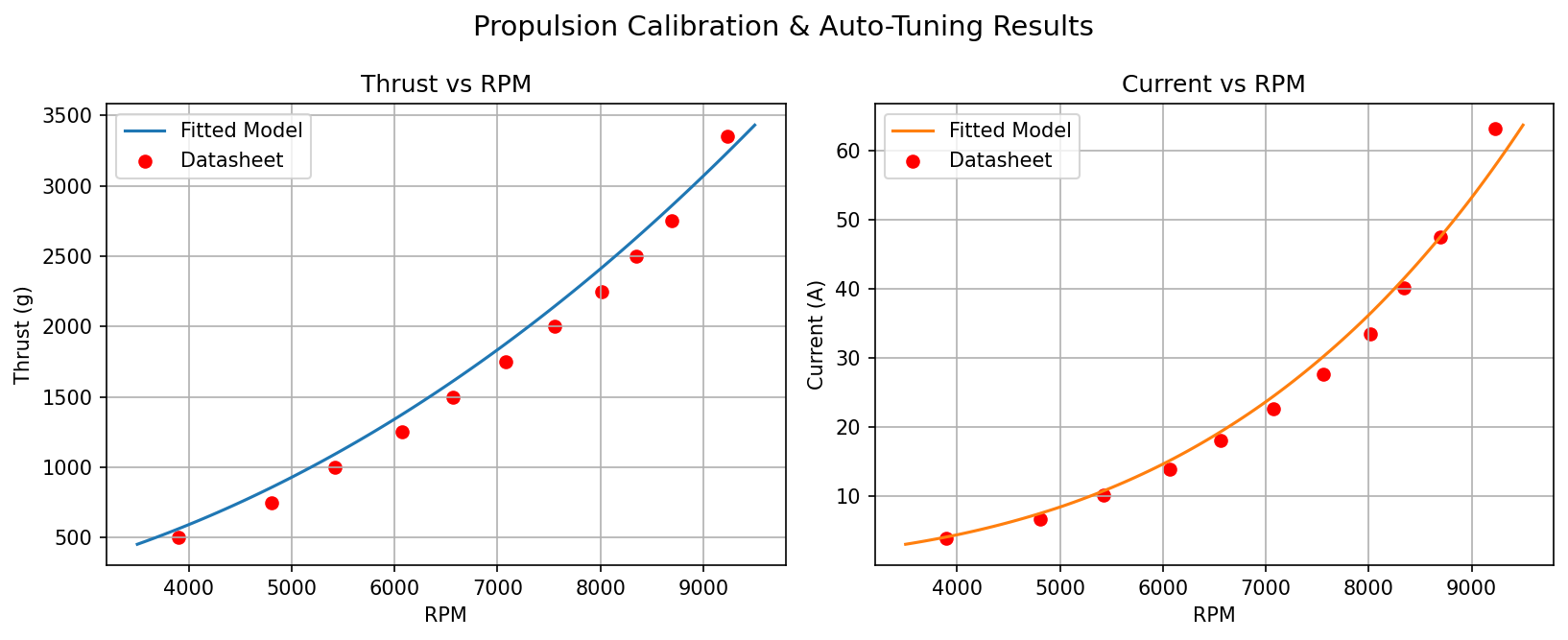
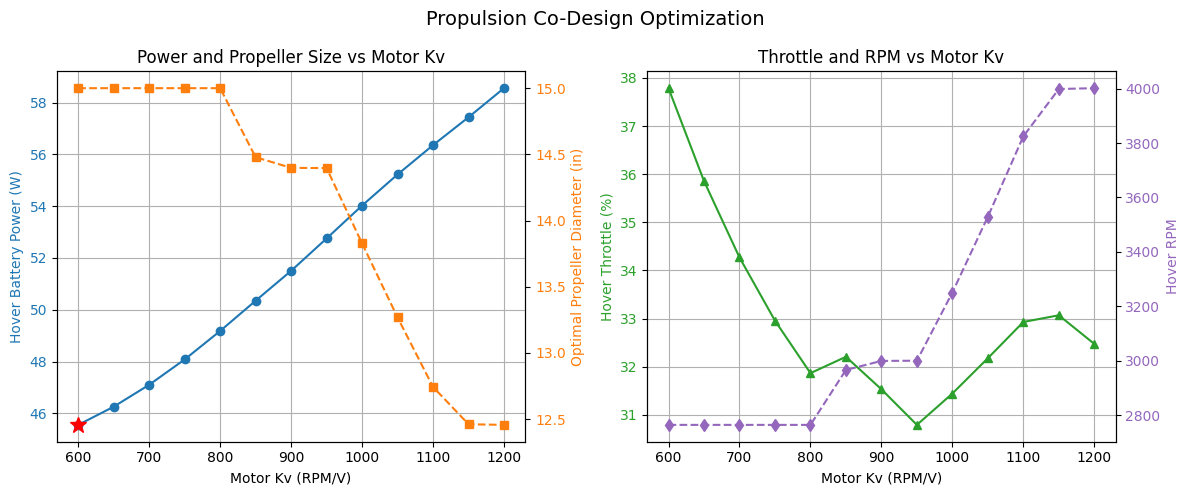
Fit lumped system resistance from test data and use the solver inside OpenMDAO co-design workflows.
Feature Visuals
| System Resistance Calibration | OpenMDAO Hover Co-Design |
|---|---|
 |
 |
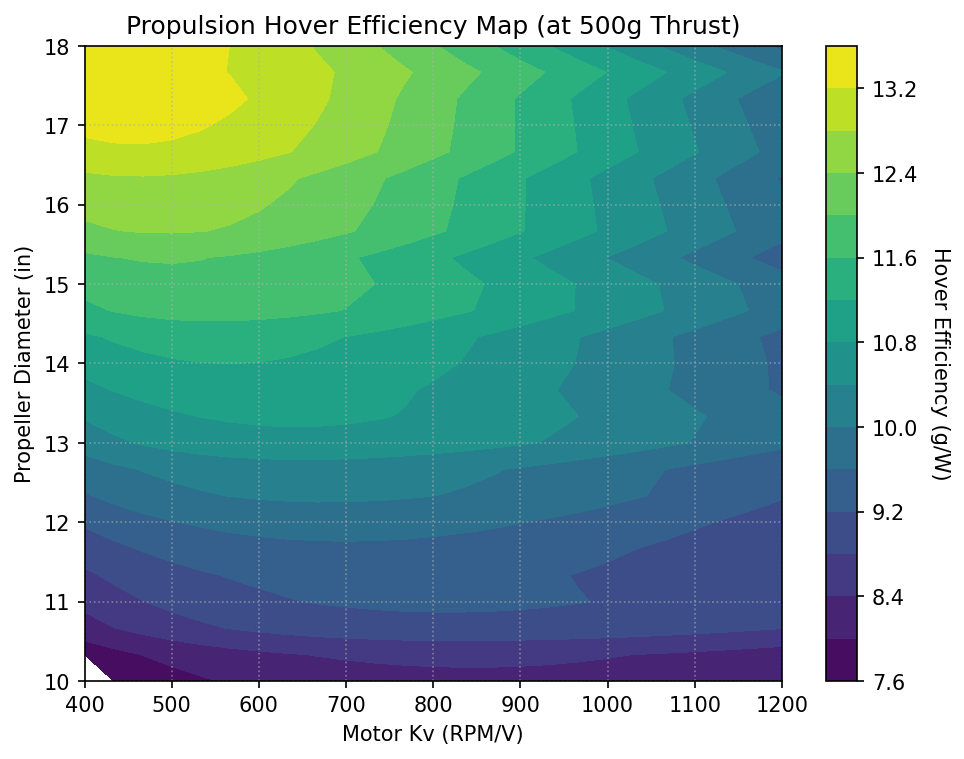
| Empirical Propeller Database | Hover Efficiency Map |
 |
 |
Explore the Docs
-
Getting Started
Install PyThrust, add optional extras, and run the first operating-point solve.
-
Propulsion Solver
Review solver inputs, equations, feasibility rules, result fields, and usage examples.
-
Battery Model
Understand fixed-voltage and rate-map batteries, JSON datasets, and solver integration.
-
Examples
Run calibration, motor selection, battery, and OpenMDAO workflows from the repository.
-
Theory
Trace the propeller, motor, electrical loss, and battery equations used by the solver.
-
API Reference
Find the main classes, database loaders, calibration objects, and OpenMDAO wrapper.